Proposed author: Dr. Ruchi Lohia | Apurva Dental Care, Kolkata
Does one tooth look longer than before? Does cold water cause a sudden twinge near your gums?
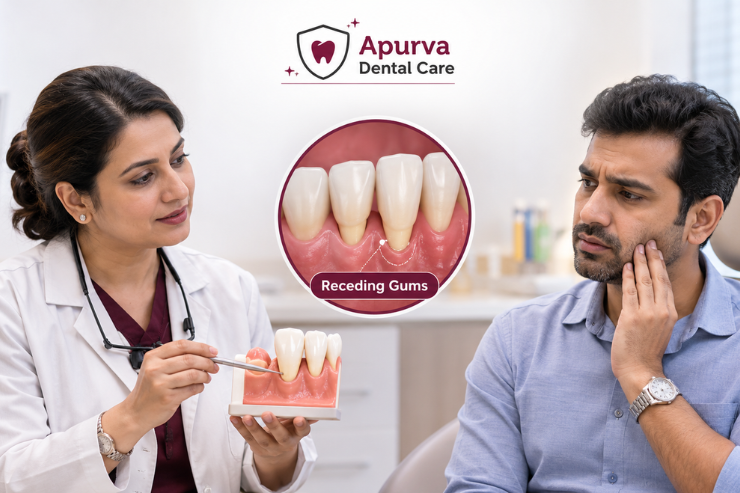
These may be signs of gum recession. It happens when the gumline pulls back, exposing more of the tooth or its root.
So, can receding gums grow back? Lost gum tissue does not usually regrow naturally. However, the cause can often be managed, and treatment may protect exposed roots.
Understanding the cause is the first step towards suitable care.
What Is Gum Recession?
Healthy gums fit closely around teeth, protecting their roots. With recession, the gum margin moves towards the root.
Teeth may look longer or feel sensitive. Some people notice a notch near the gumline; others have no pain. One or several teeth may be affected.
Why Are My Gums Pulling Away from My Teeth?
Common causes of receding gums include:
Brushing too hard
Forceful scrubbing or a hard-bristled brush can damage vulnerable gum tissue over time.
Plaque and gum disease
Plaque can inflame gums. Advanced gum disease may damage tissues supporting the teeth.
Naturally thin gums or tooth position
Thin gums and teeth positioned outside the usual arch may be more vulnerable to recession.
Tobacco use and other contributing factors
Tobacco use, certain dental appliances, and repeated local irritation may contribute. Ageing alone does not make recession inevitable, although risks can accumulate.
Can Receding Gums Grow Back Naturally?
Brushing more carefully, using mouthwash, or massaging gums cannot recreate lost tissue. But not every case needs surgery.
For mild, stable recession, monitoring and improved oral care may be enough. If gum disease is present, controlling inflammation helps protect remaining tissues.
Selected surgical procedures can cover exposed roots. Results depend on gum thickness, bone support, and the recession pattern. Returning the gumline to its original position cannot be guaranteed.
Gum Recession vs Periodontal Disease: Are They the Same?
Not exactly.
Gum recession describes a change in the gumline. It may result from brushing trauma, thin gums, or gum disease.
Gingivitis causes gum inflammation, redness, and bleeding. With appropriate care, it is generally reversible.
Periodontitis involves damage to the tissues and bone supporting teeth. It can cause recession, deep gum pockets, or loose teeth.
Recession can occur without periodontitis, while gum disease may progress without pain. A dental examination distinguishes them.
How Is Gum Recession Diagnosed?
A dentist checks the gumline, bleeding, plaque, and exposed roots. They may measure gum pockets and recommend X-rays to assess bone support.
Brushing habits, tooth position, sensitivity, and medical history also matter. These findings guide treatment.
Does Every Receding Gumline Need Treatment?
Not necessarily. A stable area without discomfort may only need monitoring and improved cleaning habits.
Treatment becomes more relevant when recession is progressing, roots are sensitive, decay develops, or gum disease is present.
For older adults, dry mouth from certain medicines can increase the risk of root decay. Tell your dentist about ongoing medicines and conditions such as diabetes.
The decision should follow an examination, not the appearance of the gumline alone.
What Are the Gum Recession Treatment Options?
Treatment depends on the cause and severity.
1. Improving daily cleaning habits
A soft-bristled toothbrush and gentler technique can reduce further irritation. A dentist can demonstrate effective brushing.
2. Professional cleaning and periodontal care
Professional cleaning removes plaque and tartar. For periodontitis, gum disease treatment may involve scaling and root planing beneath the gumline.
These procedures control disease, not regrow tissue. Recession may look more noticeable once swelling settles.
3. Managing exposed-root sensitivity
Desensitising toothpaste, fluoride applications, or protective restorations may help, depending on sensitivity, decay, or wear.
4. Gum grafting or root-coverage surgery
For selected cases, a periodontal specialist may recommend a gum graft or root-coverage procedure. Tissue may come from another area of the mouth or a suitable graft material.
These procedures can improve coverage or gum thickness. Complete coverage is not always possible, and surgery is not always necessary.
What Should You Expect After Treatment?
After cleaning, gums may feel tender briefly. Gum surgery requires more healing time and specific instructions for eating and cleaning.
Your dentist will review healing and recommend follow-ups. Ongoing maintenance matters, particularly when periodontitis is involved.
How Can You Help Prevent Further Recession?
A few habits can support gum health:
- Brush twice daily using fluoride toothpaste and a soft-bristled toothbrush.
- Clean between teeth daily with floss or an appropriate interdental brush.
- Avoid forceful horizontal scrubbing along the gumline.
- Avoid tobacco and attend dental reviews at intervals advised for your risk.
- Seek assessment for persistent bleeding, sensitivity, or a changing gumline.
Do not stop cleaning your gums simply because they bleed. Instead, ask a dentist to identify the cause and show you a comfortable technique.
When Should You See a Dentist?
Arrange an assessment if teeth appear longer, roots become visible, or sensitivity keeps returning.
Bleeding gums, persistent bad breath, or changes in tooth position also deserve attention. Swelling, pus, severe pain, or a loose tooth should be assessed promptly.
At Apurva Dental Care, a dental clinic in North Kolkata, an examination can help identify the cause and discuss suitable next steps.
Frequently Asked Questions
Can toothpaste reverse gum recession?
No toothpaste can regrow lost gum tissue. Some products may help reduce sensitivity, while improved brushing habits can limit irritation.
Does gum recession always mean I have gum disease?
No. Recession may occur without periodontal disease. A dentist can check for inflammation, gum pockets, and bone loss.
Is gum recession treatment painful?
Discomfort varies by procedure. Non-surgical cleaning and surgery may involve local anaesthesia when appropriate. Your dentist can explain what to expect.
Protecting Your Gums Starts with Understanding the Cause
Receding gums do not usually grow back on their own. Yet many causes can be managed, and treatment may help protect exposed roots.
The right approach begins with diagnosis, not a home remedy or a single treatment chosen for everyone.
Medical disclaimer: This article provides general dental information. It does not replace an individual examination, diagnosis, or treatment plan.