
Bone Graft & Sinus Lift
Procedures that rebuild jawbone volume or create space above the upper molars, laying the foundation for a stable, long-lasting dental implant.
What Is Bone Graft & Sinus Lift?
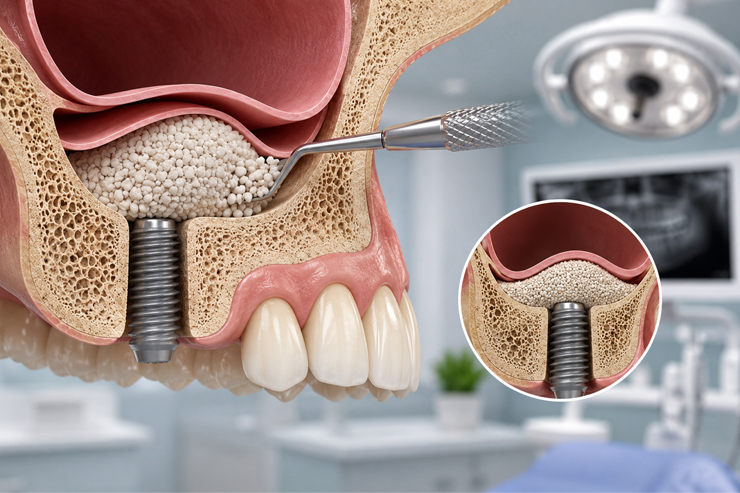
A bone graft adds material to areas of the jaw where bone has thinned or receded, while a sinus lift raises the sinus floor in the upper jaw to create enough height for an implant — both are common preparatory steps before implant placement.
These procedures are planned using detailed imaging to determine exactly how much bone is needed, and healing time is built into your overall implant timeline before the implant itself is placed.
- Builds the foundation needed for a stable implant
- Detailed imaging determines the exact graft required
- Local anaesthesia or sedation for a comfortable procedure
- Structured healing timeline before implant placement
- Improves long-term implant success rates
Signs You May Need Bone Graft & Sinus Lift
- Bone loss following a tooth extraction that was left untreated
- Insufficient bone height for a dental implant, especially in the upper back jaw
- Long-term denture wear that has led to bone shrinkage
- Your implant assessment shows the jawbone needs reinforcement
Not sure if this applies to you? A short consultation will confirm — there’s no obligation to proceed.
What Happens, Step by Step
Imaging & Assessment
A CT scan or X-ray measures the exact bone volume available in the treatment area.
Anaesthesia
The area is numbed with local anaesthesia, with sedation available for more involved cases.
Graft or Lift Procedure
Bone graft material is placed, or the sinus floor is gently lifted to create space, depending on your case.
Healing Period
The grafted area is left to heal and integrate with your natural bone over the following months.
Implant Readiness Review
A follow-up scan confirms the bone is ready to support a dental implant.
Common Questions About Bone Graft & Sinus Lift
The procedure is done under local anaesthesia, and any post-procedure discomfort is generally mild and manageable with medication.
Healing typically takes three to six months, depending on the amount of bone grafted and your individual healing rate.
Several biocompatible materials are available, and your surgeon will recommend the most suitable option for your case.
No — it's only needed when there isn't enough natural bone height in the upper jaw near the sinus for a stable implant.
Your smile deserves expert care. Book your appointment today
Same-week appointments available at our Kankurgachi clinic. Speak to our care team by phone, WhatsApp, or the form below.