
TMJ & Bruxism Care
Diagnosis and management of jaw joint pain and teeth grinding, helping relieve discomfort and protect your teeth from long-term wear.
What Is TMJ & Bruxism Care?
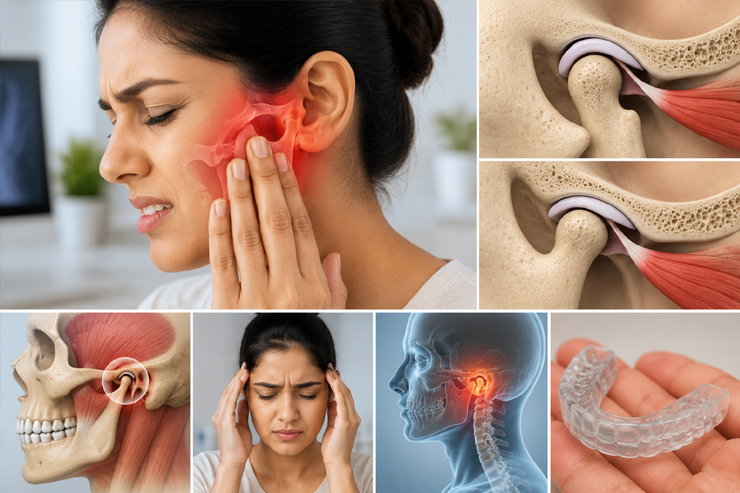
TMJ disorders affect the jaw joint and surrounding muscles, causing pain, clicking or restricted movement, while bruxism refers to grinding or clenching teeth, often during sleep, which can wear down enamel over time.
Treatment starts with identifying the cause — whether it’s stress, bite misalignment or joint strain — and a custom night guard or bite adjustment is often recommended to relieve symptoms and protect your teeth.
- Accurate diagnosis of jaw pain, clicking or grinding
- Custom night guards to protect teeth from wear
- Bite adjustment options where misalignment is a factor
- Practical guidance on managing stress-related clenching
- Follow-up review to track symptom improvement

Signs You May Need TMJ & Bruxism Care
- Jaw pain, clicking or difficulty opening your mouth fully
- Waking up with a sore jaw or headaches
- Visible wear, flattening or chipping on your teeth
- A partner noticing grinding sounds while you sleep
Not sure if this applies to you? A short consultation will confirm — there’s no obligation to proceed.
What Happens, Step by Step
Symptom Assessment
The dentist reviews your symptoms, jaw movement and any visible tooth wear.
Cause Identification
Possible causes such as stress, bite misalignment or joint strain are discussed.
Custom Night Guard (If Needed)
Impressions are taken to create a night guard that protects your teeth during sleep.
Bite Adjustment (If Needed)
Where misalignment contributes to the issue, minor bite adjustments may be recommended.
Follow-Up Review
A follow-up visit checks how well symptoms have improved and whether further adjustment is needed.
Common Questions About TMJ & Bruxism Care
Causes can include jaw injury, bite misalignment, stress-related clenching, or arthritis in the jaw joint.
A night guard won't stop the grinding urge but protects your teeth from wear and reduces strain on the jaw joint.
It's usually manageable with conservative treatment, though persistent or severe pain should always be assessed by a dentist.
Yes, stress and anxiety are common triggers for bruxism, often occurring unconsciously during sleep.
Your smile deserves expert care. Book your appointment today
Same-week appointments available at our Kankurgachi clinic. Speak to our care team by phone, WhatsApp, or the form below.