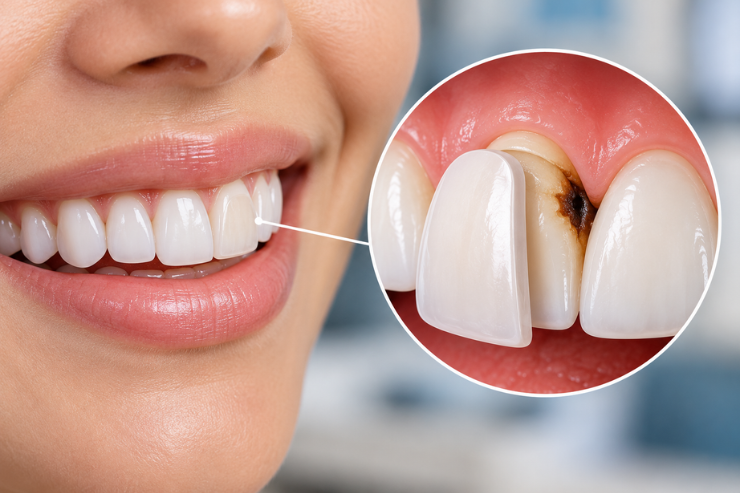
Dental veneers are designed to give teeth a natural, lasting finish, and many people assume that a covered tooth is a protected tooth. In reality, a veneer improves how a tooth looks. It does not make the tooth underneath immune to decay.
Cavities can still develop at the edges of a veneer or on the surfaces it does not cover, and they often stay painless until they have progressed. Understanding how this happens, what to look for and how to prevent it can help your veneers, and the teeth beneath them, last for many years.
Do Veneers Make Teeth Cavity-Proof?
No, they do not. A veneer is a thin shell of porcelain or composite resin, usually less than a millimetre thick, bonded to the front surface of a tooth. The material itself cannot decay, but the natural tooth beneath it still can.
What a Veneer Covers
- The visible front surface of the tooth
- Stains, chips, small gaps and uneven shape on that surface
What a Veneer Does Not Cover
- The back and sides of the tooth
- The edge where the veneer meets the tooth and gum
- The tooth structure and roots below the gum line
Think of a veneer as a good coat of paint on a wall. It looks great, but if damp seeps in from the edges, the wall behind it still suffers.
Why This Matters
Before a veneer is placed, a thin layer of enamel is usually removed so the shell sits evenly. The tooth is still alive and still needs the same daily care as any other tooth. Decay can reach it through the edges or through the uncovered surfaces, which is why veneer wearers need to be just as careful as everyone else.
Why Cavities Form Under Veneers
Plaque at the Edges
The line where the veneer meets the tooth, especially near the gums, traps food and bacteria easily. Poor cleaning here is the most common cause of decay.
Weakened Bonding Over Time
Veneers are held by dental cement. With age, biting pressure and temperature changes, tiny gaps can appear, letting bacteria slip underneath.
Decay That Was Already There
If a small cavity or gum problem was missed before the veneer was placed, it can keep growing quietly under the shell.
Lifestyle Habits
- Frequent sugary snacks, sweet chai or cold drinks
- Dry mouth from low water intake or certain medicines
- Skipping flossing or brushing at night
- Smoking or chewing tobacco and paan
Which Areas Are Most at Risk?
Gum Line and Between Teeth
- The gum line: the favourite hiding spot for plaque.
- Between teeth: where a brush cannot reach.
Back of the Tooth and Root Surface
- The back of the tooth: most veneers cover only the front surface, so the back stays fully exposed.
- The root surface: if gums recede, softer root areas become visible and decay faster.
Signs of a Cavity Under a Veneer
Early Warning Signals
Early decay is often painless, which is why it goes unnoticed. Watch for these signals:
- Sensitivity to hot, cold or sweet foods
- A dull ache or pain while chewing
- A dark line or grey shadow near the veneer edge
- Bad breath or a bad taste that does not go away
Changes in the Gums and the Veneer
- Red, swollen or bleeding gums around the veneer
- A rough edge that catches your floss or tongue
- A veneer that feels loose or has cracked
What Happens If You Ignore It?
Spread of Hidden Decay
Decay under a veneer spreads without being seen. Over time it can reach the nerve, causing infection, throbbing pain and swelling.
Bigger Treatment Later
At that stage, a simple filling may turn into a root canal, and the veneer often has to be removed or replaced. Early attention saves time, money and the tooth.
How Dentists Check and Treat It
Diagnosis
Your dentist examines the margins, checks the bite and usually takes an X-ray, since decay under a veneer is not visible to the eye.
Treatment Options
- Very small cavity at the edge: cleaned and filled, sometimes without removing the veneer.
- Cavity under the shell: the veneer is carefully removed, decay is cleaned, the tooth is rebuilt and a new veneer is placed.
- Deep decay: a root canal and a crown may be advised.
Veneers are rarely reusable once taken off, so replacement is common.
How to Protect Your Veneers From Cavities
Daily Care
- Brush twice a day with a soft brush and fluoride toothpaste.
- Floss daily or use interdental brushes, gently around the gum line.
- Rinse your mouth with water after meals and sweets.
Habits to Change
- Limit sugary snacks and slow sipping of sweet drinks.
- Avoid biting nails, ice, pen caps or opening packets with your teeth.
- Use a night guard if you grind your teeth in sleep.
Regular Check-Ups
- Get a dental check-up and cleaning every six months.
How Long Do Veneers Last?
Porcelain vs Composite Veneers
Porcelain veneers typically last 10 to 15 years, and composite veneers around 5 to 7 years.
What Decides Their Lifespan
The real lifespan depends on the health of the tooth underneath and on how well you clean around them.
When to See a Dentist
Signs You Should Not Wait For
Do not wait for pain. Book a visit if you notice sensitivity, bleeding gums, a changing edge or a loose veneer.
What a Good Check-Up Includes
A well-regarded dental clinic in north Kolkata, or anywhere near you, will usually look for these things:
- A thorough check of veneer edges and gums
- X-rays when needed
- Clear explanation of findings before any treatment
Final Thoughts
A veneer gives you a beautiful smile, but it stays beautiful only while the tooth underneath stays healthy. Daily cleaning and regular check-ups are what protect that investment.
If your last dental visit was more than six months ago, this is a good moment to book one with a trusted dental clinic in north Kolkata. A quick check today can save your smile tomorrow.
Frequently Asked Questions
1. Can a veneer fall off because of a cavity?
Yes. Decay weakens the tooth surface that holds the veneer, so the bond loosens and the veneer may pop off or feel loose.
2. Do veneers make teeth more prone to cavities?
Not by themselves. But the edges can trap plaque if cleaning is poor, and some of the natural tooth is shaved down for placement, so good care matters even more.
3. Can a cavity under a veneer be fixed without removing it?
Only if the cavity is tiny and at the edge. If decay is under the shell, the veneer usually has to be removed and replaced.
4. Does a cavity under a veneer hurt?
Not always. Early decay is often painless. Pain, sensitivity or a bad taste usually appear after it has grown deeper.
5. How often should I get my veneers checked?
Every six months, along with a professional cleaning. Visit sooner if you notice any sensitivity, swelling or change at the edge.
This blog is for general educational purposes only and is not a substitute for professional dental advice, diagnosis or treatment. Every patient’s oral health needs are different, so please consult a qualified dentist for guidance specific to your condition.