
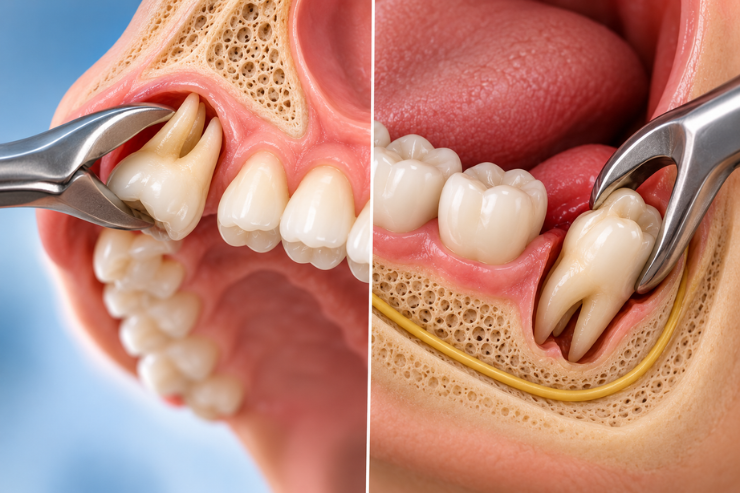
One side of the mouth after a wisdom tooth removal heals quietly while the other keeps you up at night, same procedure, two very different recoveries. It isn’t random. Upper and lower wisdom teeth sit in different bones, grow at different angles, and are removed through different steps.
Denser jawbone, tighter nerve proximity, and more frequent impaction often make lower wisdom tooth removal take longer than upper. Actual surgical difficulty is debated in research, but duration and recovery commonly differ between the two.
Why Upper and Lower Teeth Aren’t the Same
The upper and lower jaw are built differently, and that difference shapes how a wisdom tooth behaves.
- Lower jawbone is denser and firmer
- Upper jawbone is comparatively softer, allowing easier access
- Available space for eruption varies by jaw and individual anatomy
- Root and nerve positioning differs significantly between the two
These structural differences, not the tooth itself, are what usually decide how straightforward or involved an extraction turns out to be.
A Quick Fact
Studies on wisdom tooth removal show lower jaw extractions can take around 10 minutes longer on average than upper jaw extractions. Reported complication rates after lower wisdom tooth removal also range widely, from about 2.6% up to nearly 31% across different studies, depending on how complex the case is. Individual results vary, and these figures reflect averages across many patients, not a fixed outcome for any one person.
Why Lower Wisdom Teeth Often Need More Time
Lower wisdom teeth are impacted far more often than upper ones, which is part of why they tend to need a longer, more careful approach.
| Factor | Lower Wisdom Tooth |
| Bone density | Denser, firmer bone |
| Impaction frequency | More common |
| Nerve proximity | Closer to a major nerve |
| Typical procedure time | Slightly longer on average |
Root curvature, nerve distance, and the angle of impaction all vary from person to person, which is why two lower wisdom teeth can lead to very different experiences even when they look similar on the surface. A dentist in Kankurgachi Kolkata factors these specifics in before deciding the exact approach for a particular tooth.
Why Upper Wisdom Teeth Are Often Simpler
Upper wisdom teeth aren’t always easier, but softer bones and better visibility often make the process more straightforward.
- Bone around upper molars is generally softer
- Access and visibility during the procedure tend to be better
- Individual root shape and position can still add complexity
- Some upper teeth can be just as involved as lower ones
Whether a specific case turns out simple or detailed still depends on that individual tooth, not the jaw alone.
Lower or Upper: Which Tooth Is Harder To Extract?
Research findings are genuinely mixed.
- Some studies report similar surgical difficulty between upper and lower impacted wisdom teeth
- Other studies note the lower jaw procedure tends to take longer and may carry a higher complication range
- No study found the upper jaw to be consistently harder than the lower
The honest answer: lower wisdom tooth extractions often need a bit more time and care, but “harder” depends heavily on the specific tooth’s position, not a blanket rule about upper versus lower.
Recovery: What Differs, What Doesn’t
Recovery patterns can vary slightly by jaw position, though individual healing speed plays a bigger role than position alone.
| Aspect | What to Expect |
| Swelling | More noticeable with lower jaw procedures for some patients |
| Jaw stiffness | More common after lower extractions |
| Numbness risk | Specific to lower procedures due to nerve proximity |
| Overall healing time | Varies by individual, not fixed to jaw position |
A dental clinic in Maniktala Kolkata offering this procedure typically explains what to expect for a specific tooth rather than giving a generic recovery timeline.
When Both Sides Are Removed Together
Sometimes all four wisdom teeth, or both on one side, are planned for removal in a single sitting. This is usually considered when each tooth’s position allows it and the patient is comfortable with a longer single appointment rather than multiple separate visits. Recovery is then managed together instead of in stages, which some patients prefer and others don’t, depending on how they handle swelling and rest afterward.
What Determines Tooth Extraction Difficulty
Across the research, a few factors consistently stand out as the real predictors of how involved a wisdom tooth removal will be, more than upper or lower position alone:
- How deeply the tooth is impacted
- The curvature and number of roots
- How close the roots sit to the nerve canal
- The patient’s age, since difficulty and complication rates tend to rise with age
Knowing which of these apply to a specific tooth is what actually shapes the approach, not assumptions based on which jaw it’s in.
Teeth Position Explains More Than Pain Does
The real difference between upper and lower wisdom tooth removal isn’t about which one hurts more, it’s about bone density, nerve proximity, and how each tooth sits in the jaw. Lower extractions often take a little longer and may involve more careful planning, while upper ones are frequently simpler, though not always. Wisdom tooth removal in Kolkata is typically planned around these individual factors rather than general assumptions about one jaw being tougher. If a wisdom tooth has been a source of worry, a conversation with a qualified dentist near Maniktala Kolkata can offer actual clarity rather than guesswork.
Author:
Dr. Ruchi Lohia
BDS, TMJ Specialist, & Head Dentist at Apurva Dental Care
Frequently Asked Questions
Q1. Is it true that lower wisdom teeth always hurt more during recovery?
Not always. Lower extractions often involve more swelling and stiffness due to denser bone, but individual pain levels vary based on tooth position and personal healing.
Q2. Can an upper wisdom tooth ever be more complicated than a lower one?
Yes, in some cases. Root shape, angle, and depth of impaction matter more than jaw position alone, so complexity can vary either way.
Q3. Why does numbness happen more often with lower wisdom tooth removal?
The lower jaw has a major nerve running close to wisdom tooth roots, so numbness, usually temporary, is more specific to lower procedures.
Q4. How is wisdom tooth removal in Kolkata typically planned?
Most clinics assess root shape, nerve distance, and impaction depth before deciding the specific approach for each individual tooth, since these details vary from person to person.
Q5. Does age affect whether upper or lower extraction is harder?
Age can influence healing time and bone density, which may affect difficulty, though this depends more on individual factors than on upper versus lower position alone.
Disclaimer: This content is for general educational purposes only and does not constitute medical advice. Outcomes vary between individuals. Please consult your treating doctor for a personalised assessment before starting any treatment.