
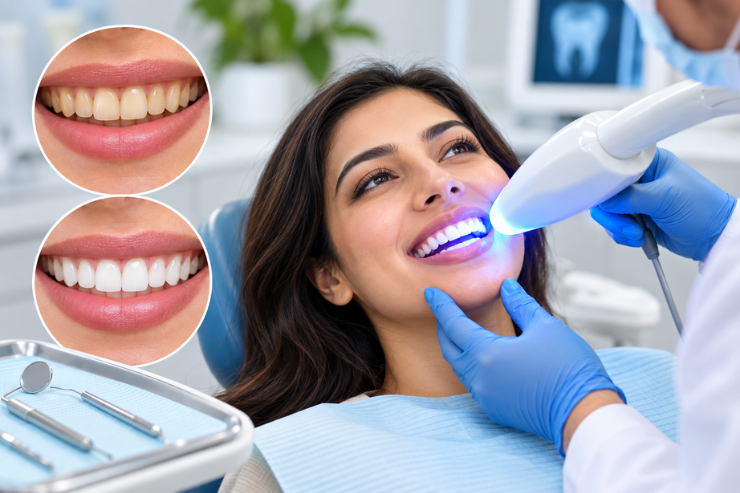
Professional teeth whitening uses dentist-supervised whitening agents to reduce certain stains and brighten natural teeth. A dental check-up confirms whether the treatment suits your teeth and gums. If you are considering teeth whitening at a dental clinic in Salt Lake, understanding the process can help you make an informed decision.
A brighter smile can change how confidently you smile, speak, or meet people. Professional teeth whitening is more than just applying a whitening gel to teeth.
What Causes Teeth to Look Yellow or Stained?
Teeth naturally change colour over time. Food, ageing, and oral hygiene can all contribute to staining.
Stains that remain on the tooth surface are called extrinsic stains. Tea, coffee, tobacco, and certain foods can cause them.
Other discolouration develops within the tooth. These are called intrinsic stains— age-related changes, certain medications, trauma, or developmental conditions can contribute to them.
Professional whitening can improve discolouration. However, it does not whiten every type of stain equally.
How Does Professional Teeth Whitening Work?
Teeth whitening involves using peroxide-based bleaching agents. Hydrogen peroxide and carbamide peroxide are widely used at dental clinics.
As you undergo professional teeth whitening, your dentist applies a high-concentration bleaching gel to the teeth. The active ingredients then penetrate the enamel and reach the dentin, targeting and breaking down pigmented compounds responsible for tooth discolouration.
Based on stain level, a special light is used to assist the treatment process. However, the whitening agent itself plays the central role in changing tooth colour.
Factors to Consider Before Teeth Whitening Treatment
Professional teeth whitening usually begins with an assessment of overall dental health, stain condition, and several other factors.
1. Teeth and Gum Health
The condition of your teeth and gums is an important consideration before whitening.
The dentist checks for cavities, gum problems, cracks, and other oral health concerns. Existing problems may need attention before cosmetic treatment begins.
2. The Current Shade of Your Teeth
Your natural tooth shade helps determine what kind of whitening result may be possible.
The dentist may assess your existing tooth colour before treatment. This provides a useful reference and helps set realistic expectations.
Natural teeth also respond differently to whitening. The final shade can vary from person to person.
3. Existing Tooth Sensitivity
If your teeth are already sensitive, this should be discussed before whitening.
Whitening can cause temporary sensitivity in some people. The dentist can consider your sensitivity level when recommending a suitable treatment approach.
This helps make the treatment more comfortable and appropriate for your needs.
4. Existing Dental Restorations
Whitening does not change the colour of tooth-coloured fillings, crowns, veneers, or other restorations, nor whiten like natural teeth.
The dentist checks for visible restorations before recommending whitening. This is especially important when restorations are present on the front teeth.
The colour difference needs to be discussed beforehand to achieve realistically results.
5. The Type and Cause of Staining
The reason behind tooth discolouration also matters.
Surface stains from tea, coffee, tobacco, or certain foods may respond well to whitening. Deeper or intrinsic discolouration may respond differently.
A dental assessment helps determine whether whitening is suitable for the type of staining present.
6. Protection of Gums and Soft Tissues
Whitening gels contain active ingredients that can irritate gum tissue if they come into direct contact with it.
During the treatment, the dentist takes precautions to limit this contact.
5. Reassessment of Teeth
After the planned treatment, the teeth are checked again. Further treatment may or may not be appropriate.
The goal is a result that is appropriate for the individual’s dental needs.
Professional Whitening vs At-Home Whitening
There are several ways to whiten teeth. These include professional teeth whitening, at-home whitening, and over-the-counter products.
| Factor | Professional Teeth Whitening | At-Home or OTC Whitening |
| Whitening products | Uses professionally selected high-concentration peroxide-based whitening agents under dental supervision. | Usually contains peroxide at lower concentrations. Includes whitening strips, gels, toothpaste, or trays with varying ingredients. |
| Treatment control | The dentist controls the application, treatment time, and areas being treated. | Restricted to product instructions only. |
| Gum protection | The dentist takes protective measures for the gums and soft tissues. | Poor application may allow the product to come in contact with the gums. May lead to irritation. |
| Type of stains | Can be planned according to surface stains and some deeper discoloration. | May work better for mild surface stains, depending on the product. |
| Tooth sensitivity | Existing sensitivity can be discussed and controlled. | Sensitivity may increase if the product is used too often or incorrectly. |
| Results | The treatment is monitored and adjusted according to individual needs. | Results can vary based on the product and consistency of use. |
| Aftercare | Includes advice about aftercare, food habits, and future whitening. | Guidance is generally limited to the product packaging. |
Teeth whitening is not suitable for every situation. Some people need a subtle improvement. Others may have specific staining they want to address.
Understanding what whitening can and cannot achieve makes the decision easier.
Can Teeth Whitening Cause Sensitivity?
Temporary tooth sensitivity is one of the most common effects associated with teeth whitening. It happens because the bleaching molecules weaken the enamel and the core becomes more sensitive to temperature.
Individuals may experience sensitivity during or after treatment. Gum irritation can also occur, particularly when whitening products contact the gums.
The likelihood and intensity can vary. The concentration of the whitening agent, treatment duration, and existing sensitivity issue can get influenced.
These effects are generally temporary, but persistent discomfort should be discussed with a dentist.
What Can You Expect After Whitening?
Whitening can make natural teeth look lighter, but it does not permanently prevent future staining.
Your teeth can gradually pick up new stains from everyday habits. Tea, coffee, tobacco, and certain foods can contribute to this process.
Good brushing, regular dental cleaning, and routine dental checkups at nearby dental clinics in Salt Lake can help maintain oral health and the appearance of your smile.
It is also important not to repeat whitening treatments more frequently than recommended. More whitening does not necessarily mean a better result.
A Brighter Smile Starts with the Right Approach
Professional teeth whitening is generally safe and can provide a noticeable improvement in tooth colour. It works by targeting the stain without harming your tooth structure. You may experience temporary sensitivity, but it’s manageable.
With good oral hygiene and regular dental care, the results can last for a significant period. So, if you’re planning onto achieve a confident smile, get it under expert supervision.
Author:
Dr. Ruchi Lohia
BDS, TMJ Specialist, & Head Dentist at Apurva Dental Care