
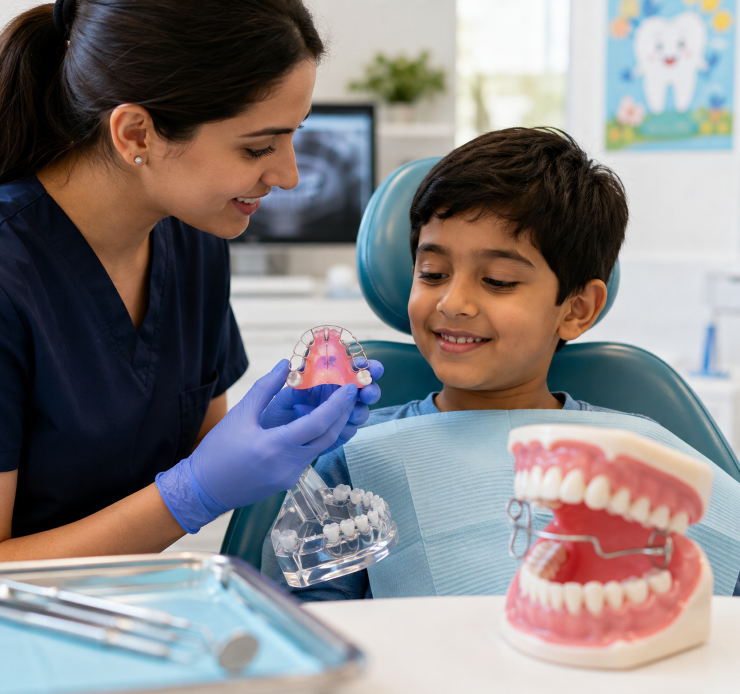
As a pediatric dentist, one of the questions I hear most often from worried parents is this: “My child lost a tooth early — do we need to do something about it, or will it just fix itself?”
It’s a fair question, and the honest answer is: it depends. Not every early tooth loss needs intervention, but some do — and knowing the difference can help you catch a problem early, before it turns into years of orthodontic trouble later on. Let’s walk through what’s actually happening in your child’s mouth, and how to know if a space maintainer is something worth discussing with your dentist.
Why Baby Teeth Matter More Than You Think
Baby teeth (also called milk teeth) aren’t just placeholders your child will “grow out of” anyway. They serve three important jobs:
- Holding space for the permanent tooth growing underneath
- Guiding the permanent tooth into its correct position
- Supporting normal chewing, speech development, and jaw growth
When a baby tooth falls out at the right time — because the permanent tooth underneath is ready to erupt — nature handles the spacing on its own. Problems usually start when a tooth is lost too early, whether due to decay, injury, or infection.
What Actually Happens When a Tooth Is Lost Too Soon
Think of baby teeth as reserved seats in a row. If one seat opens up early, the teeth next to it don’t just wait patiently — they start drifting into that empty space.
Here’s the chain reaction that can follow:
1. Neighbouring Teeth Shift
Adjacent teeth tilt or move sideways into the gap.
2. The Space Shrinks
By the time the permanent tooth is ready to come in, there may not be enough room left for it.
3. Crowding or Misalignment
The permanent tooth erupts crooked, impacted, or out of position — sometimes needing years of orthodontic correction later.
This is exactly where a space maintainer comes in.
What Is a Space Maintainer?
A space maintainer is a small, custom-made dental appliance that “holds the door open” for the permanent tooth. It doesn’t fix anything by itself — it simply prevents the surrounding teeth from drifting into the gap until the adult tooth is ready to erupt naturally.
It’s typically made of metal or a tooth-coloured material and is fitted comfortably around the neighbouring teeth.
Common Types of Space Maintainers
- Band and loop: Used when a single tooth is lost; a small wire loop holds the space.
- Distal shoe: Used when the tooth lost is a second baby molar and the permanent molar hasn’t erupted yet.
- Lingual holding arch: Used when multiple lower teeth are lost on both sides.
- Removable space maintainer: A removable option, generally for older, more cooperative children.
Your child’s dentist will choose the type based on which tooth was lost, the child’s age, and how much time is left before the permanent tooth is expected.
So, Does Your Child Actually Need One?
Not always. A pediatric dentist typically evaluates a few key factors before recommending a space maintainer:
Which Tooth Was Lost
Front teeth are less likely to need one, since crowding there is less common. Back teeth (molars) are more critical, as they hold the most space.
How Early the Tooth Was Lost
The earlier the loss compared to the tooth’s natural falling-out age, the higher the chance of drifting — and the more likely a space maintainer is recommended.
How Long Until the Permanent Tooth Erupts
If the permanent tooth is expected to come in within a few months, a space maintainer may not be necessary. If it’s more than six months away, the risk of shifting increases significantly.
Existing Crowding in the Mouth
If your child already has a naturally crowded bite, even a short delay can lead to noticeable misalignment.
This is why a simple dental check-up — usually including a quick X-ray — is the only reliable way to know for sure. It’s not something that can be judged just by looking at the gap.
What Happens If a Space Maintainer Is Needed but Skipped?
This is where many parents underestimate the impact. Skipping a recommended space maintainer can lead to:
- Permanent teeth erupting crooked or twisted
- Insufficient room, causing impacted teeth
- A shifted bite that affects chewing
- Longer, more complex orthodontic treatment later
- In some cases, the need for tooth extraction to create space in the teenage years
In short, a small preventive appliance today can mean avoiding years of braces and correction later.
Caring for a Space Maintainer at Home
If your child does need one, care is fairly simple:
- Avoid sticky, chewy, or hard foods that could dislodge it
- Encourage regular brushing around the appliance
- Keep up with follow-up visits so the dentist can monitor tooth eruption
- Contact the dentist promptly if it feels loose, bent, or comes out
Most space maintainers stay in place until the permanent tooth is ready to erupt, at which point the dentist removes them — a quick, painless procedure.
The Bottom Line
Losing a baby tooth early isn’t automatically a problem — but it isn’t something to ignore either. The safest step is a timely evaluation, ideally within a few weeks of the tooth loss, so your child’s dentist can determine whether the space needs protection.
If your little one has lost a tooth earlier than expected, don’t leave it to guesswork — a quick check-up today can save a lot of corrections tomorrow. Book a consultation and give your child’s smile the head start it deserves.
Author
Dr. Trisha Das Sharma
BDS, MDS – Pediatric & Preventive Dentistry | Pediatric Dentist
Frequently Asked Questions
1. My child lost a tooth early from a fall — is that different from losing it due to a cavity?
Not really, from a spacing point of view. Whether a tooth is lost due to injury or decay, the empty space behaves the same way, and nearby teeth can still drift into it. What matters most is how early it was lost and how long until the new tooth is expected.
2. How do I know if the tooth was “too early” or just normal for their age?
Baby teeth generally fall out in a fairly predictable order and age range. If a tooth comes out much earlier than usual for its type, or without any wiggling or natural loosening beforehand, it’s worth getting checked rather than assuming it’s normal.
3. Does a space maintainer hurt to put in or wear?
No, fitting one is a simple, non-invasive process and most children adjust to wearing it within a day or two. It may feel slightly unusual at first, similar to how a new retainer feels, but it shouldn’t cause pain.
4. Can we just wait and see if teeth shift before deciding?
This is where problems often begin. Shifting can happen faster than expected, sometimes within a couple of months, and once teeth have moved, it’s much harder to correct without more involved treatment. An early check-up is a safer approach than waiting to see.
5. Will my child need braces anyway, even with a space maintainer?
Not necessarily. A space maintainer’s job is simply to preserve room for the permanent tooth to erupt naturally in its own space. Many children who get timely space maintainers go on to have normal eruption patterns without needing orthodontic treatment at all.
This article is intended for general educational purposes only and should not be considered a substitute for professional dental advice. Every child’s case is different — always consult a qualified pediatric dentist for an evaluation specific to your child.