
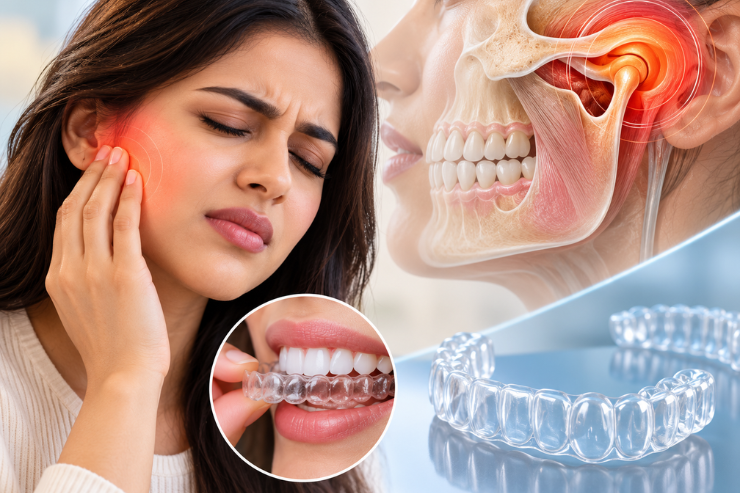
Most people start aligner treatment thinking about their teeth, not their jaw. Then a dull ache near the ear shows up weeks in, and the question becomes unavoidable: is this normal, or something to worry about?
Jaw soreness that shows up partway through aligner treatment often leaves patients wondering if the aligners are to blame, or helping. Aligners don’t reliably cause or cure TMJ issues, but they can interact with existing clenching habits in ways worth understanding before deciding how to proceed.
Why This Question Comes Up So Often
Jaw soreness during aligner treatment isn’t rare, but it isn’t automatically explained either. A few reasons this confusion happens:
- Aligners sit in the mouth for most of the day, so any existing jaw tension becomes harder to ignore
- Teeth shifting slightly can change how the bite feels temporarily
- Some patients only discover a clenching habit once aligners make it more noticeable
None of this means the aligner caused the issue, it often means the issue was already there, just unnoticed before.
How Aligners and TMJ Are Actually Connected
There isn’t a single, settled answer here, and that’s worth saying upfront rather than oversimplifying it. The connection between aligners and jaw joint health seems to vary quite a bit from person to person.
| What Happens | How It Shows Up |
| Eased jaw tension | Some patients with existing clenching habits feel their jaw muscles relax slightly |
| No noticeable change | Many patients see little to no difference in jaw symptoms either way |
| More jaw discomfort | A smaller group notices more clenching or jaw ache during treatment |
What this means in practice: aligners don’t reliably cause or fix jaw joint issues on their own. The outcome depends heavily on the individual, which is why this is best discussed directly with a dentist rather than assumed either way.
Can Aligners Ease Clenching in Some Patients?
For some patients, aligners may act as a light cushion between the upper and lower teeth, slightly reducing direct tooth-to-tooth contact during clenching episodes.
- This isn’t the same as treating or curing a TMJ disorder
- Any relief tends to be incidental, not the purpose of the aligner
- Individual results vary considerably, and not every patient notices a difference
This is worth knowing, not as a reason to expect relief, but to understand why some patients do report feeling slightly more comfortable during treatment.
When Aligners Might Add to Jaw Strain Instead
The reverse can also happen, and it’s a detail most patient-facing content skips entirely.
- Patients prone to grinding or clenching sometimes direct that habit onto the aligner itself
- Aligners are not built like a hard night guard, so heavy grinding can wear or crack them faster than expected
- Needing frequent tray replacements due to damage is worth mentioning at a review visit
Neither outcome, easier or harder, is guaranteed. It genuinely depends on how a person’s jaw habits interact with aligner wear.
Jaw Pain Before Starting: Why It Matters
Research in this area generally points to one practical takeaway: existing jaw pain or a known grinding habit is worth addressing before aligner treatment begins, not after.
- A dentist can assess jaw and muscle condition as part of the initial plan
- Existing TMJ discomfort doesn’t rule out aligner treatment, it simply shapes how the plan is approached
- Addressing it early tends to make the overall treatment experience more predictable
A dentist in Kankurgachi Kolkata reviewing a case with jaw symptoms will typically factor this in before finalising a treatment plan.
Signs Worth Mentioning to Your Dentist
A few specific signs are worth raising at a review visit rather than waiting out:
- Jaw soreness that began only after starting aligners
- Trays cracking, warping, or wearing out faster than expected
- Morning jaw tightness that lines up with overnight aligner wear
- Headaches that seem to follow tray-wearing hours
None of these confirm a problem on their own, but they’re useful details for a dentist near Maniktala Kolkata to factor into the next review.
What a Combined Plan Can Look Like
For patients with both aligner treatment and jaw-related concerns, a few approaches may be discussed, entirely based on individual assessment:
- A slightly thicker aligner material for patients with stronger clenching habits
- A separate night guard worn alongside aligners, used at different times
- A closer review schedule to monitor jaw comfort through treatment
None of these are a default recommendation, they’re simply options that come up in a dental clinic in Maniktala Kolkata when a case calls for it. The right approach depends entirely on the individual, and that decision stays with the patient and their dentist together.
What Helps Is Clarity And Not a Verdict
Jaw clenching and aligner treatment share a connection that research hasn’t fully settled, and pretending otherwise wouldn’t serve patients well. What’s clear is that neither outcome is automatic, aligners might feel like a relief for some, a mild strain for others, and most people won’t notice much change in their jaw at all. If jaw soreness or clenching comes up during treatment, raising it early with a qualified dentist is what actually leads to clarity, not guessing based on someone else’s experience.
Author:
Dr. Ruchi Lohia
BDS, TMJ Specialist, & Head Dentist at Apurva Dental Care
Frequently Asked Questions
Q1. Can aligners cause jaw pain that wasn’t there before treatment started?
It’s possible for some patients, especially those with an undiagnosed clenching habit. It isn’t universal, and a dentist can help determine the actual cause.
Q2. Is it safe to start aligner treatment with existing TMJ discomfort?
Generally yes, though it’s usually addressed as part of the initial assessment. A dentist typically plans treatment around existing jaw symptoms rather than ignoring them.
Q3. Do aligners wear out faster for people who grind their teeth?
They can. Aligners aren’t built as durable as a hard night guard, so heavy grinding may lead to more frequent tray damage or replacement needs.
Q4. Can a night guard be used at the same time as aligners?
Yes, though typically at different times of day, since both aren’t usually worn together. A dentist can advise on a suitable schedule for both.
Q5. How would a dentist know if jaw pain is related to aligner wear?
Through a review of symptom timing, tray condition, and a physical jaw examination. This helps separate aligner-related discomfort from unrelated causes.
Disclaimer: This content is for general educational purposes only and does not constitute medical advice. Outcomes vary between individuals. Please consult your treating doctor for a personalised assessment before starting any treatment.