
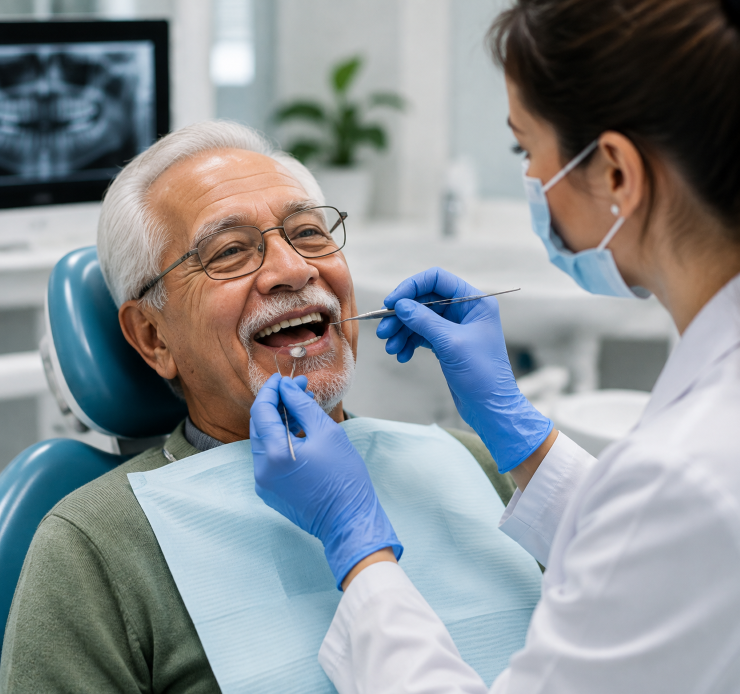
With age comes wisdom, wealth, and unfortunately, health challenges. Dental issues in old age can significantly disrupt life’s balance, affecting nutrition intake and facial appearance.
Most elderly individuals experience tooth sensitivity, loose teeth, difficulty chewing, dry mouth, bleeding gums, or discomfort with dentures. This blog explains what changes with age, signs not to ignore, and how planned dental care can support senior citizens.
If you are looking for a dental clinic in North Kolkata for senior dental care, understanding these basics can help you ask the right questions during consultation.
Why Dental Health Deteriorates with Age
Oral health can become more vulnerable with age due to changes in the body and certain medical conditions. What mostly changes with age is bone density, gradually leading to gum disease, tooth loss, and other complications.
1. Biological Changes
- Reduced Jawbone Strength:
With age, bone density may gradually reduce. This can weaken the jawbone, especially in areas where teeth have been missing for a long time. Reduced bone support can also influence the stability of remaining teeth and the fit of dentures. - Reduced Saliva Production:
Saliva plays an important role in protecting teeth by washing away food particles and helping maintain a balanced oral environment. With ageing, some people may experience reduced saliva flow, leading to dry mouth. A dry mouth can increase the risk of cavities, gum irritation, bad breath, and oral discomfort. - Exposure To Acidic Foods:
Frequent consumption of acidic foods and beverages can gradually weaken tooth enamel, making teeth more sensitive and vulnerable to erosion. Over time, this increases the risk of discoloration, decay, impacted root canals, and dry mouth. - Reduced Ability To Fight Infections:
Our immune system is impacted with age, which affects how the body responds to infections. This includes infections of the gums and oral tissues. Maintaining good oral hygiene becomes increasingly important to support gum health.
These biological changes do not mean that dental problems are unavoidable. Routine dental check-ups, professional teeth cleaning, and timely treatment can help manage dental care for seniors.
2. Chronic Medical Conditions
Elderly people often suffer from chronic health conditions that significantly influence oral health. Medications to manage those conditions can also affect the mouth.
- Diabetes:
Diabetes can increase the risk of gum problems. Elevated blood sugar levels may make it harder for the body to control infections. Gum inflammation can also make oral care more challenging. - High Blood Pressure And Heart Conditions:
Many medications used for managing blood pressure and heart conditions may contribute to dry mouth in some individuals. Therefore, reduced saliva flow can increase the risk of cavities and oral complications. - Arthritis And Mobility-Related Concerns:
Conditions affecting hand movement may make brushing, flossing, or denture cleaning difficult. Seniors may need support or modified oral hygiene methods to maintain daily dental care. - Neurological Conditions:
Certain neurological conditions may affect chewing, swallowing, muscle control, or the ability to maintain regular oral hygiene. Such concerns require additional attention during dental visits. - Medication-Related Oral Changes:
As high-dose medication intake is very common in older adults, oral tissues become prone to dental problems and, to an extent, delayed recovery from dental treatments.
Common Dental Problems in Seniors
1. Gum Recession and Tooth Sensitivity
With age, gums may recede and expose the tooth root. This causes sensitivity to cold water, sweets, brushing, or air.
The root surface is not as hard as enamel. So it can develop decay more easily.
2. Dry Mouth
Dry mouth, clinically known as Xerostomia, is a common dental issue in seniors who are on medication for severe health conditions. Study suggests nearly 60% of older adults aged 65 and above suffer from dry mouth.
Saliva helps clean the mouth and neutralise acids. But when its natural production is reduced, the risk of cavities, bad breath, mouth soreness, and fungal infections increases.
3. Gum Disease
Gum disease, such as gingivitis and periodontitis are major dental concern in seniors. As these conditions do not cause severe pain at first, when left untreated for years, they cause tooth loss.
Signs may include:
- Bleeding while brushing
- Swollen gums
- Bad breath
- Loose teeth
- Food getting stuck
- Gum recession
- Difficulty chewing
Professional dental cleaning, gum evaluation, and proper brushing guidance may help manage the condition at an earlier stage. The treatment depends on the severity of gum disease and overall oral health.
4. Worn Teeth and Bite Changes
Teeth can wear down over time due to grinding, acidic food habits, old fillings, missing teeth, or uneven chewing pressure.
Some seniors may notice that their bite feels different. Others may experience jaw discomfort, fractured fillings, or difficulty chewing hard food.
A bite evaluation can help identify the cause. Depending on the case, treatment may include dental fillings, crowns, night guards, or full mouth rehabilitation.
However, individuals must note, full mouth rehabilitation is not the same for every patient. It involves careful planning to restore chewing function, comfort, and tooth support based on individual needs.
5. Tooth Loss
Irrespective of the cause, tooth loss is common in old age. It may not significantly hamper health, but can take a deep toll on self-esteem.
Treatment options to restore smooth oral function and appearance may include dentures, bridges, dental implants, all-on-4 implants, or full mouth rehabilitation, depending on gum health, bone support, medical history, and budget considerations.
Dental implants for seniors may be considered in suitable cases. However, implant treatment always requires proper diagnosis, scans when needed, and a discussion about maintenance.
Dental Problems and Dentures
Dental problems may become more common with age, but they should not be dismissed as unavoidable. Pain, bleeding gums, loose teeth, dry mouth, and difficulty chewing deserve attention.
There is a common belief that seniors do not need dental care if they have dentures. This is not true. Denture wearers also need oral examinations. The gums, tongue, cheeks, jawbone, and denture fit should be checked.
Loose dentures can cause ulcers, difficulty eating, and speech issues. Dentures also need cleaning and periodic review.
Dental care for senior citizens is not only about treating teeth. It is about maintaining oral function, comfort, and hygiene.
Dental Care Tips for Seniors
Senior dental care focuses on prevention, comfort, and daily function.
- Brush twice daily with a soft-bristled toothbrush and fluoride toothpaste.
- Use floss or interdental brushes to clean between teeth
- Dentures must be cleaned regularly (brushing) and soaked overnight in cleaning solutions.
- Consider a diet rich in calcium and vitamin D to support teeth and bones.
- Drink adequate water to support saliva formation.
Dental Treatments for Seniors
Scaling and Gum Care
Professional teeth cleaning can remove plaque and tartar that regular brushing cannot remove. It helps support gum health.
Fillings and Root Canal Treatment
Cavities can happen at any age. In seniors, cavities may occur near old fillings or exposed roots.
If decay is early, a filling may be enough. If infection reaches the inner part of the tooth, root canal treatment may be considered. The decision depends on examination and X-ray findings.
Dentures, Bridges, and Implants
Missing teeth can be replaced in different ways. While dentures are removable, bridges are fixed to nearby teeth. Implants are placed in the jawbone in suitable cases.
There is no single option for everyone. The right choice depends on oral health, bone support, medical condition, maintenance ability, and patient comfort.
Full Mouth Rehabilitation
Senior citizens with multiple missing teeth, worn teeth, old dental work, bite problems, or chewing difficulty can consider full mouth rehabilitation.
This treatment approach may involve a combination of crowns, bridges, dentures, implants, fillings, or bite correction. It should always be planned after a detailed dental evaluation.
Cosmetic Dentistry for Seniors
Some adults above 60 also ask about smile improvement. Treatments such as bonding, veneers, whitening, or crowns may be suitable in selected cases.
Before cosmetic dentistry, gum health, tooth strength, and existing dental work need to be assessed.
Appearance should not be planned separately from function.
Dental Care for Seniors: Final Thought
Senior dental care is not always about doing many procedures. The priority is comfort & confidence. Irrespective of age, most individuals delay dental visits due to fear, cost concerns, or a belief that treatment might be painful.
If you or your old buddy is facing dental problems, adopt healthy habits and seek professional care.
For elderly patients with diabetes, heart disease, or other medical conditions, dental care should be planned carefully. A proper dental examination can help identify the cause and guide the next step.
At Apurva Dental Care, consultation focuses on understanding the patient’s concern, examining the mouth, and explaining suitable options.
Author:
Dr. Ruchi Lohia
BDS, TMJ Specialist, & Head Dentist at Apurva Dental Care
FAQs
1. Are dental implants suitable for senior citizens?
Dental implants may be suitable for some senior citizens. The decision depends on gum health, jawbone support, oral hygiene, medical history, and overall treatment suitability.
2. Is tooth loss normal after 60?
Tooth loss is common in older adults, but it should not be considered unavoidable. With proper oral hygiene, gum care, and timely treatment, many people can retain natural teeth for longer.
3. Why do many seniors experience dry mouth?
Dry mouth may occur due to medicines, reduced saliva flow, medical conditions, or dehydration. It should be discussed with a dentist because it can increase cavity risk and oral discomfort.
4. How often should seniors visit a dentist?
Many senior citizens may benefit from a dental check-up every six months. However, the frequency may vary depending on gum health, missing teeth, dentures, dry mouth, and medical conditions.
5. What is the best toothpaste for seniors?
Fluoride-based toothpastes are ideally good for seniors.
Disclaimer: This blog is for general dental awareness only. It should not replace a personal dental consultation. Diagnosis and treatment may vary based on oral health, medical history, current medicines, clinical examination, and required investigations.