
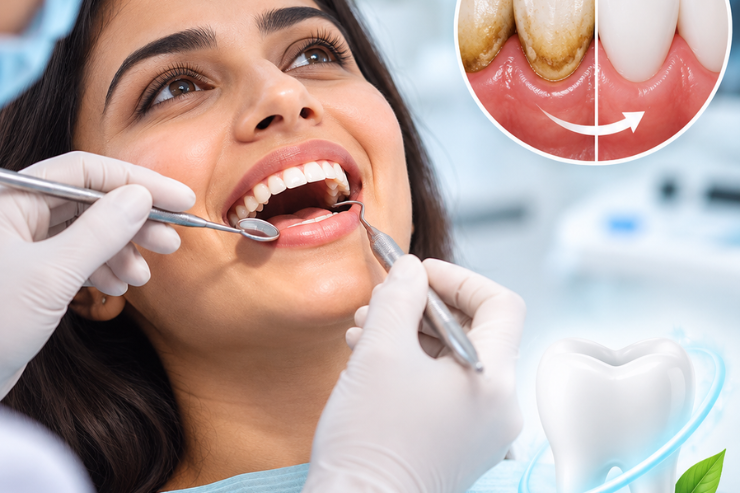
A tooth that feels the slightest bit different right after a cleaning can be unsettling, especially when the appointment was meant to help, not create a new worry. This fear stops many people from getting a cleaning they actually need, based on a sensation that’s often misunderstood.
Dental scaling does not loosen healthy teeth. The tools used only remove tartar and plaque, they don’t put pressure on tooth roots or bone. What sometimes feels like looseness after cleaning is usually gum adjusting, or an already-loose tooth becoming noticeable once tartar that was holding it in place is removed. Genuine tooth mobility points to gum disease, not the cleaning itself.
Why Dentists Recommend Scaling
Tartar buildup left untreated can irritate gums and, over time, contribute to gum disease. Regular scaling helps keep that buildup from progressing to a stage where it affects the gums and bone supporting the teeth.
| Without Scaling | With Scaling |
| Tartar builds up steadily | Tartar is cleared before it accumulates |
| Gums may become irritated over time | Gums stay less prone to inflammation |
| Risk of gum disease increases gradually | Risk is reduced through consistent care |
Why Teeth Feel Different Right After Cleaning
A few sensations are common right after a cleaning, and none of them mean the tooth has become unstable.
- A vibrating or scraping sensation during the procedure itself
- Mild sensitivity to hot or cold for a day or two afterward
- Gums feeling slightly tender where tartar was removed
- A “smoother” or unfamiliar feel across the teeth
Individual results may vary, and these sensations typically settle within a few days without needing further treatment.
Scaling vs Deep Cleaning: The Difference
These two terms often get used interchangeably, though they refer to different depths of cleaning.
| Basis | Scaling | Deep Cleaning (Root Planing) |
| Area treated | Tooth surface, just below the gum line | Deeper, along the tooth root and root surface |
| Typically used for | Routine plaque and tartar removal | Gum disease that has progressed further |
| Gum condition addressed | Mild tartar buildup, healthy or mildly inflamed gums | Gum pockets that have deepened due to disease |
| Sensation during procedure | Mild pressure or vibration | May involve more pressure near the root area |
| Numbing typically needed | Rarely required | Local anaesthesia is more commonly used |
| Number of visits | Usually completed in one sitting | May be spread across two or more visits |
| Recovery time | A day or two of mild sensitivity | Slightly longer, gums may take a few more days to settle |
| Frequency | Every six months, generally | As advised, based on gum condition |
A dentist decides which is appropriate after examining gum depth and tartar levels, so this isn’t something to self-diagnose.
Does Scaling Hurt? What to Expect
Professional teeth cleaning is generally well-tolerated, and sharp pain during the process is not typical. Mild sensitivity is more common, particularly for those with tender gums or a first-time cleaning.
- Most people describe pressure or vibration, not pain
- Numbing options are available for those with sensitive gums
- Discomfort, if any, is usually brief and fades quickly after
Anyone searching for “painless teeth cleaning near me” is often looking for exactly this reassurance, and clinics generally accommodate sensitivity concerns before starting.
Are You The Right Candidate For Scaling?
Scaling isn’t reserved for one type of patient, it’s a routine part of oral care that most adults benefit from at some point.
- Anyone with visible tartar buildup along the gum line
- People experiencing early gum tenderness or mild bleeding while brushing
- Those due for a routine six-month check-up
- Smokers or individuals prone to faster tartar buildup
Whether scaling is needed right now depends on individual gum and tooth condition, which is best assessed during an examination rather than guessed at home.
How Does the Scaling Procedure Work?
The process is straightforward and generally follows the same steps for most patients.
- Examination: gums and tartar levels are checked first
- Scaling: tartar and plaque are removed using an ultrasonic device or hand instruments
- Polishing: a gentle paste smooths the tooth surface afterward
- Rinse and review: gums are checked once more before the appointment ends
The entire process is done gradually and doesn’t involve cutting into gum tissue or touching the tooth root.
Aftercare Tips Following Scaling
A few simple habits help gums settle comfortably after a cleaning.
- Avoid very hot, cold, or acidic foods for a day or two if sensitivity occurs
- Rinse gently with lukewarm salt water if gums feel tender
- Continue brushing normally, being slightly gentler near the gum line
- Avoid smoking for a short period afterward, as it can slow gum healing
Individual recovery time may vary, and any unusual or prolonged discomfort is worth mentioning at the next visit.
Signs That Are Worth a Dentist’s Visit
While scaling itself isn’t the cause, tooth mobility is real and worth paying attention to when it shows up alongside these signs:
- A tooth feels loose even weeks after a cleaning, not just briefly
- Gums appear swollen, red, or pull away from the tooth
- Visible gum recession around one or more teeth
- Bleeding continues beyond a few days
- Pain occurs while chewing on that specific tooth
- Any uncertainty about whether a sensation is normal or not
These signs usually point toward gum disease or another underlying issue that needs its own evaluation, separate from any recent cleaning. A dentist can examine gum health and tooth stability directly, which is the only reliable way to know what’s actually happening.
Reading the Signal Right
A tooth feeling slightly different right after a cleaning is common, and in most cases, it settles on its own within a few days. Dental scaling doesn’t create loose teeth, it clears away what tartar may have been concealing, which is different entirely. A sensation fading within a few days is expected; one that lingers, worsens, or comes with swelling or bleeding isn’t. Since tooth mobility can stem from several causes, gum disease, bone loss, or old trauma among them, self-diagnosing from a single sensation isn’t reliable.
If discomfort continues beyond a few days, that in-person check is what actually confirms whether it’s routine or needs attention. A dentist can examine the gum and bone support directly, something no amount of guessing at home can substitute for.
Author:
Dr. Ruchi Lohia
BDS, TMJ Specialist, & Head Dentist at Apurva Dental Care
Frequently Asked Questions
Q1. How long does a teeth cleaning appointment usually take?
A routine scaling session generally takes 30 to 45 minutes, though this can vary depending on the amount of tartar buildup and individual gum condition.
Q2. Is it normal for gums to bleed slightly during scaling?
Mild bleeding can occur, especially if gums are inflamed beforehand. It usually settles within a day or two and isn’t typically a cause for concern.
Q3. How often should scaling be done?
Most dentists recommend scaling every six months, though frequency may be adjusted based on individual oral hygiene and gum health.
Q4. Does scaling make teeth more sensitive afterward?
Some temporary sensitivity to hot or cold is common after scaling. It usually fades within a few days as gums settle.
Q5. Can scaling prevent gum disease from developing?
Regular scaling reduces tartar buildup, which lowers the risk of gum irritation over time, though individual outcomes depend on overall oral hygiene habits.
Disclaimer: This content is for general educational purposes only and does not constitute medical advice. Outcomes vary between individuals. Please consult your treating doctor for a personalised assessment before starting any treatment.