
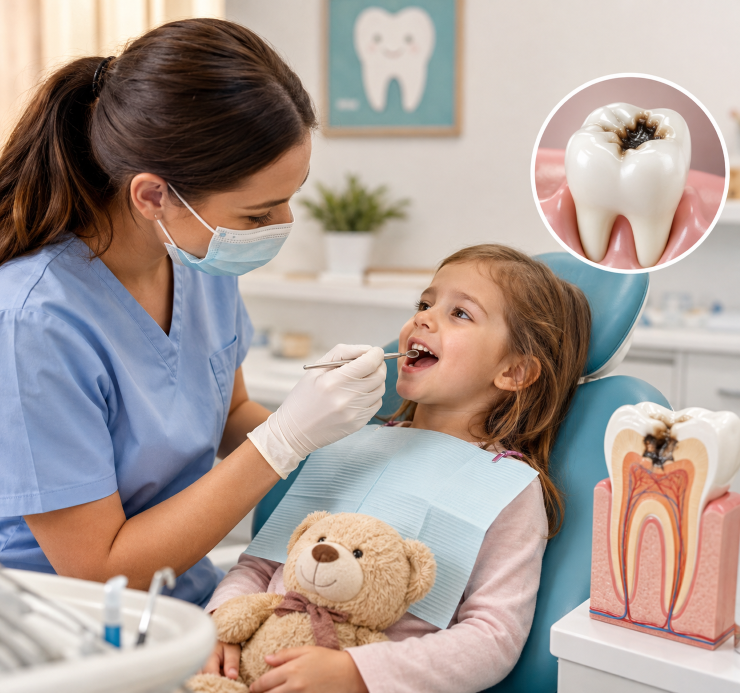
six months of their first tooth appearing. After that, a check-up every six months helps catch issues early, monitor growth patterns, and reinforce good oral habits before problems develop.
The Bottom Line
Baby teeth may be temporary, but the consequences of ignoring cavities in them are not. Untreated decay can lead to pain, infection, nutritional issues, and long-term effects on permanent teeth and jaw alignment.
Most of this is preventable with consistent home care and timely dental visits. If your child shows any early signs of tooth decay, it’s always better to get it evaluated sooner rather than later — early intervention is simpler, gentler, and far more effective than treating advanced decay.
If it’s been a while since your child’s last dental check-up, now is a good time to schedule one and stay ahead of any potential issues. Whether you’re searching for a dental clinic in North Kolkata or elsewhere, choosing a pediatric-focused practice can make the experience easier for both you and your child.
Frequently Asked Questions
Q1. Do baby teeth cavities really need to be treated if the tooth is going to fall out anyway?
Yes. Even though baby teeth fall out eventually, an untreated cavity can cause pain, infection, and can even damage the permanent tooth growing underneath it. Treating it early protects your child’s long-term dental health.
Q2. How can I tell if my child has a cavity if they’re too young to explain it?
Watch for signs like white or brown spots on the teeth, bad breath, sudden fussiness while eating, avoiding certain foods, or swelling near the gums. If you notice any of these, it’s worth getting it checked.
Q3. Can a cavity in a baby tooth spread to other teeth?
Yes, cavity-causing bacteria can spread to nearby teeth, especially if oral hygiene isn’t consistent. This is one of the main reasons early treatment is important — it stops the decay from affecting more teeth.
Q4. Is it painful for a child to get a cavity filled?
Modern pediatric dental treatments are designed to be as comfortable as possible, often using local numbing so your child feels little to no discomfort during the procedure. Most kids handle it well, especially with a calm, reassuring approach.
Q5. At what age should my child have their first dental visit?
It’s generally recommended that children see a dentist by their first birthday or within six months of their first tooth coming in. This helps catch any issues early and gets your child comfortable with dental visits from a young age.
This blog is for general educational purposes and does not replace a personalized consultation with a qualified pediatric dentist. If you have concerns about your child’s dental health, please consult a dental professional for guidance specific to your child.