
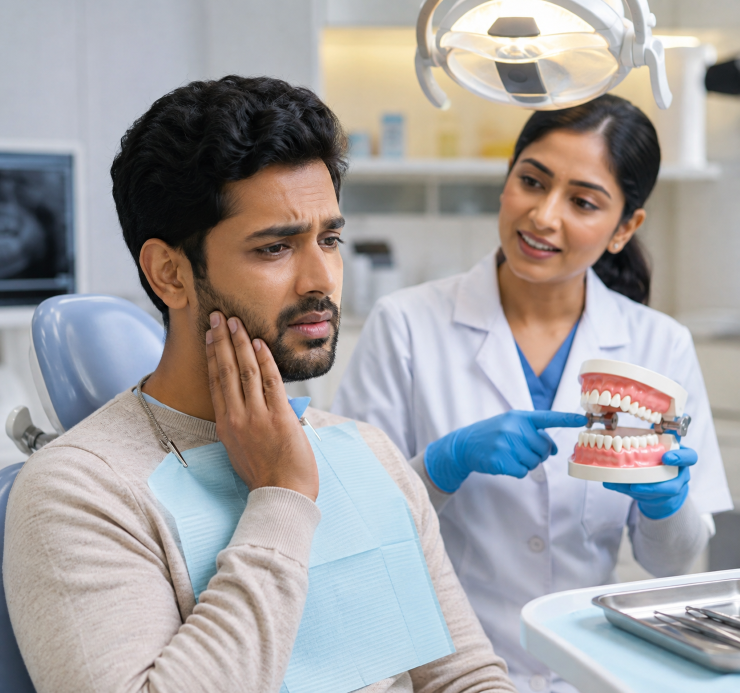
Bleeding gums after brushing, breath that doesn’t go away even with mints, or a jaw that clicks every time you chew, many of these get brushed aside as “nothing serious.” Left unchecked, these small clues often point to gum disease, worn enamel, or infections that are far easier to manage early than later.
This blog is a quick guide to the everyday signs worth watching, and when it’s time to get them checked.
Individual results may vary. Please consult your treating doctor for a personalised assessment before starting any treatment.
Bleeding Gums: More Than Rough Brushing
Many people assume bleeding while brushing simply means they’re brushing too hard. A day or two of light bleeding after starting to floss again is common. But bleeding that repeats daily, along with puffy or dark red gums, usually points to early gum disease.
- Gums bleed with light brushing, not just hard brushing
- Gums look swollen, shiny, or dark red instead of pale pink
- A persistent bad taste comes along with the bleeding
Patients searching for “painless teeth cleaning near me” are often looking for exactly this kind of reassurance, since a professional cleaning can clear the plaque buildup behind early gum bleeding without discomfort.
Bad Breath That Lingers All Day
Everyone has the occasional bad breath after a meal or first thing in the morning. What’s worth noting is breath that returns quickly even after brushing, flossing, and mouthwash.
| What’s Common | What’s Worth Noting |
| Breath after coffee, garlic, or onions | Breath that returns minutes after brushing |
| Mild morning breath | A bitter or metallic taste through the day |
| Dry mouth after waking up | Others noticing it more than before |
Persistent bad breath is often linked to gum disease or a coated tongue, though occasionally it points to something outside the mouth entirely, which is why a dental check helps rule things out. A dry mouth can also play a role, since saliva naturally washes away the bacteria that cause odour, and reduced saliva flow lets that bacteria build up faster.
Jaw Clicking and Morning Jaw Soreness
A clicking or popping sound when opening the mouth wide isn’t always a concern on its own. But when it’s paired with other signs, it’s worth paying attention to.
- Clicking or popping when chewing or yawning
- Jaw muscles feel tired or sore first thing in the morning
- A partner mentions grinding sounds during sleep
- Front teeth look slightly flatter or shorter than before
These signs often point toward teeth grinding or jaw joint strain, both of which are manageable once identified early. Left unaddressed over months, grinding can gradually wear down enamel, making teeth more sensitive and, in some cases, more prone to chipping.
When You Favour One Side Without Noticing
Chewing mostly on one side often happens quietly, usually after discomfort on the other side settles in. Over time, this uneven habit can add extra strain to the jaw and wear certain teeth faster than others.
- One side of the mouth feels more “comfortable” to chew with
- Jaw soreness shows up mostly on one side, not both
- Food seems to naturally end up on the same side each time
This habit often connects to the same jaw strain covered earlier like grinding, clenching, or a tooth that’s slightly sensitive can all quietly push chewing to one side.
Teeth That Seem to Be Growing Longer
Teeth don’t actually keep growing, what changes is the gum line. As gums recede, more of the tooth becomes visible, making teeth appear longer over time. This is common with age, which is one reason geriatric dental care in Kolkata often focuses closely on gum health.
- Teeth appear longer compared to a few years ago
- Tooth roots look slightly darker or more exposed near the gum line
- New sensitivity appears exactly where the gum has pulled back
Gum recession tends to progress slowly, which is why it’s easy to miss until it’s fairly noticeable. Brushing too hard, gum disease, and natural aging are among the common contributors, and a dentist can usually tell which one applies after a simple examination.
Sensitivity and Sores Worth Watching
A quick twinge from something cold is common. Sensitivity that lingers, or a sore that won’t heal, is different.
- Sensitivity that lasts more than a few seconds after hot or cold food
- A sore, ulcer, or patch inside the mouth that hasn’t healed in two weeks
- Pain when chewing that keeps returning around one particular tooth
Most mouth sores heal on their own within a week or two. Anything that lingers beyond that is worth showing to a dentist for an in-person check, simply as a precaution, since early attention is easier than a delayed one.
A Wisdom Tooth That’s “Just There”
Not every wisdom tooth causes pain, and that’s exactly why it’s easy to overlook. A wisdom tooth that hasn’t fully come through can sit quietly for years without discomfort.
- No pain, but slight pressure felt at the back of the jaw
- Difficulty reaching the back teeth properly while brushing
- Nearby teeth appear to be shifting or crowding slightly
A dental X-ray is usually the only way to know what’s happening beneath the gum line, since a wisdom tooth causing pressure doesn’t always show visible signs.
Routine or Worth a Visit? A Quick Reference
| Sign | Possibly Just… | Worth a Visit If… |
| Bleeding gums | New flossing routine | Happens daily, gums look swollen |
| Bad breath | After a heavy meal | Persists all day, every day |
| Jaw clicking | Occasional and painless | Sore mornings, visible teeth wear |
| Longer-looking teeth | Natural ageing alone | Roots visible, sensitivity rising |
| Mouth sore | A minor bite or irritation | Still present after two weeks |
A tooth that keeps aching around a specific spot, especially with lingering sensitivity, may sometimes need attention like root canal treatment, and Kolkata clinics generally recommend an evaluation before symptoms worsen.
Hear What Your Mouth Is Signaling You
None of these signs mean something is definitely wrong, they’re simply worth noticing rather than brushing aside. Bleeding gums, lingering sensitivity, or a jaw that clicks are rarely isolated, they’re often connected to the same underlying habit or condition, and individual results may vary from person to person.
If any of these sound familiar, or it’s been a while since your last check-up, a conversation with a qualified dentist near you is a good next step, wherever you happen to be based. Ignoring these signs rarely makes them go away, it just makes the eventual fix longer.
Remember, a mouth that’s cared for quietly rarely needs to shout for attention later.
Author:
Dr. Ruchi Lohia
BDS, TMJ Specialist, & Head Dentist at Apurva Dental Care
Frequently Asked Questions
Q1. How do I know if bleeding gums are serious?
Occasional light bleeding after flossing can be normal for a few days. Bleeding that continues daily, especially with swelling, usually needs a dental check.
Q2. Can stress cause jaw clicking or teeth grinding?
Yes, stress is a common trigger for clenching or grinding, which can lead to jaw soreness and clicking sounds over time. A dentist can help identify the cause.
Q3. Is bad breath always related to oral hygiene?
Usually, yes, but not always. It can also relate to a dry mouth, sinus issues, or diet. Persistent bad breath is worth discussing with a dentist.
Q4. Why do my teeth look longer than before?
This is usually due to gum recession, where the gum line pulls back and exposes more of the tooth. It’s common with age and worth monitoring.
Q5. When should a mouth sore be checked by a dentist?
If a sore, ulcer, or patch hasn’t healed within two weeks, it’s best to have it looked at, purely as a precaution and for peace of mind.
Disclaimer: This content is for general educational purposes only and does not constitute medical advice. Outcomes vary between individuals. Please consult your treating doctor for a personalised assessment before starting any treatment.