
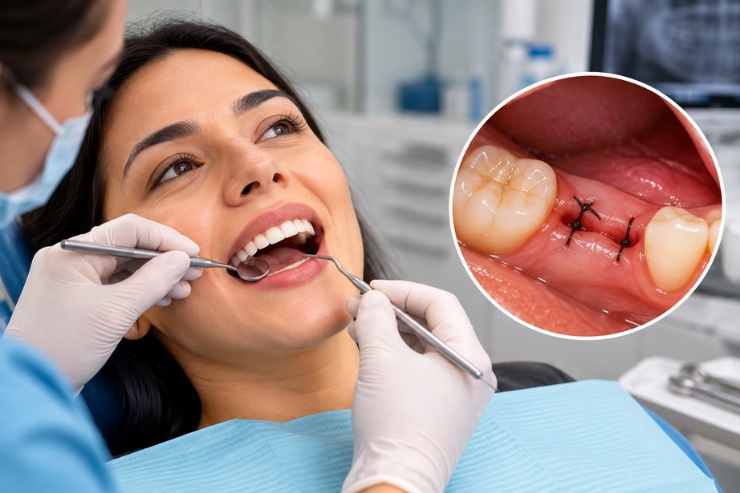
After a tooth extraction, many people notice a small thread sitting in the gum where the tooth used to be. It feels unfamiliar, and it raises a few quiet questions. Why is it there? Is it meant to stay? When will it come out?
These stitches are a routine part of extraction care. They protect the healing area and help the gum recover cleanly. This guide explains why dentists place them, which types are used, how long they stay, and how to look after them, so you can recover with confidence.
What Are Tooth Removal Stitches?
Stitches, also called sutures, are small sterile threads that hold the edges of the gum together around the extraction socket. Think of them as a gentle bandage for soft tissue. They keep everything steady while your body rebuilds gum and bone underneath.
In my experience, most worry about stitches comes from not knowing they were coming. Once people understand the purpose, the thread in the mouth stops feeling like a problem and starts feeling like protection.
Why Dentists Place Stitches After Extraction
Removing a tooth leaves an open socket, and that socket has one job: to heal in an orderly way. Stitches support that process in several ways.
Control bleeding and protect the clot
A blood clot forms in the socket within minutes, and it is the foundation of healing. Stitches bring the gum edges close so the clot stays stable and bleeding settles sooner. This matters most after surgical extractions, where the socket can keep oozing for longer.
Reduce the risk of dry socket
Dry socket occurs when the clot is lost too early, leaving the bone exposed. It usually shows up as a sharp, throbbing pain two to four days after the extraction. Stitches do not remove this risk completely, but by holding the gum snugly around the clot, they make it less likely to be disturbed.
Keep food and bacteria out
An open socket collects food particles easily, and the mouth is never free of bacteria. Closing the gum reduces both, which lowers the chance of infection.
Shape the gum for the future
How the gum heals decides how smooth the ridge feels and how well it supports a replacement. If you plan to fill the gap later with an implant or bridge, neat closure now makes that work simpler.
When Are Stitches Needed?
Not every extraction calls for them. A loose or fully erupted tooth with a small socket often heals well without any stitches. The picture changes when the procedure involves more work on the gum or bone.
Stitches are usually placed in these situations:
- Surgical extractions, where the gum is cut or the tooth is sectioned
- Impacted wisdom teeth
- Multiple extractions in one sitting, which leave a larger wound
- Patients on blood thinners or with conditions that slow healing
One thing worth saying plainly: stitches do not mean something went wrong. More often, they mean the dentist is being careful.
Types of Dental Stitches
Dentists choose between two broad kinds, depending on the site and the type of extraction.
Dissolvable stitches
These are made of materials such as gut or polyglactin (Vicryl) and break down on their own, usually within 1 to 2 weeks. Some last up to 3 or 4 weeks. Because no removal visit is needed, they are the most common choice inside the mouth.
Non-dissolvable stitches
Usually made of silk or nylon, these hold firmly and are chosen when stronger or longer support is needed. They must be removed by the dentist, typically 7 to 10 days after the extraction.
Neither type is better than the other. It is a clinical decision, not a quality ranking.
What stitch removal feels like
Removal is quick. The dentist snips the thread and slides it out in under a minute. Most people feel a slight tug, and an injection is rarely needed.
Healing Timeline After Extraction
Knowing what to expect each day takes away much of the anxiety. Healing follows a fairly predictable pattern:
- Day 1: The clot forms. Light oozing and pink-tinged saliva are normal.
- Days 2 to 3: Swelling and tenderness usually peak.
- Days 4 to 7: Discomfort eases and the gum begins to close.
- Days 7 to 14: Stitches loosen, dissolve, or are removed.
- Weeks 3 to 6: The gum heals fully, while the bone underneath keeps remodelling for months.
Everyone heals at a slightly different pace, so a day or two either way is not a cause for concern.
What Is Normal and What Is Not
Most of what people notice in the first week falls within normal healing. Mild oozing in the first 24 hours, swelling that peaks around day two or three, and a stitch loosening late in the process are all expected.
White or yellowish tissue over the socket
This is one of the most misunderstood sights after an extraction. Many people assume it is pus, but a whitish or yellowish layer is usually healing tissue forming over the wound. It becomes a concern only when it comes with a foul taste, spreading redness, fever, or pain that gets worse after day three.
Tongue irritation from the thread
Almost everyone notices this. The thread feels rough and strange at first, and the tongue keeps going back to it. The sensation fades as the stitch softens. Resist the urge to play with it, as that can loosen it too early.
Aftercare That Protects Your Stitches
The first day matters most, and a few simple habits make a real difference.
The first 24 hours
Bite gently on clean gauze for 30 to 45 minutes to control bleeding. Avoid rinsing, spitting hard, or touching the area, and skip straws, since suction can dislodge the clot. A cold compress on the outside of the cheek, used in intervals, helps with swelling. When resting, keep your head slightly raised.
After the first day
You can begin gentle warm salt-water rinses, especially after meals. Stick to soft, lukewarm food such as dal, khichdi, curd, or mashed vegetables, and avoid anything spicy, crunchy, or very hot near the site. Brush the rest of your teeth normally, but go gently around the stitches.
What to avoid
- Smoking and tobacco: they slow healing and raise the risk of dry socket. Avoid them for at least 48 to 72 hours, and longer if you can.
- Poking the area with your tongue, fingers, or toothpicks
- Strenuous exercise for the first day or two
Managing Pain After Extraction
Mild pain is expected for two to three days and usually eases steadily. Use only the painkillers your dentist recommends, and follow the prescribed schedule rather than waiting for the pain to build. Antibiotics are given only when there is a clear need, so avoid starting them on your own.
Other Ways to Protect the Socket
Stitches are not the only tool. Dentists may place a gelatin sponge inside the socket to support clotting. When an implant is planned, a bone graft covered with a membrane may be used to preserve the bone. These are sometimes combined with stitches for added protection.
Special Situations
Some health conditions and life stages call for a little extra care:
- Diabetes: healing can be slower, so careful closure and follow-up matter more.
- Blood thinners: never stop them on your own. Your dentist will plan the extraction around them.
- Smokers: the risk of dry socket is higher, so avoid tobacco for as long as possible.
- Children and older adults: they may need help with eating, rinsing, and not touching the area.
When to Contact Your Dentist
Most recoveries are uneventful, but certain signs should not be ignored. Get in touch if you notice:
- Bleeding that does not slow down after 24 hours despite firm pressure
- Pain or swelling that increases after the third day
- Fever, a bad taste, or pus around the site
- A stitch that comes out within the first day or two
- Difficulty swallowing or breathing, which needs urgent care immediately
Choosing Where to Get Your Extraction Done
An extraction is minor surgery, so the setting matters as much as the procedure. If you are searching for a dental clinic in Maniktala, Kolkata, or any other area, a few things are worth looking for. A good practice explains why the tooth needs to be removed and what the alternatives are. It follows proper sterilisation and uses single-use materials. It also gives clear aftercare instructions and a defined plan for follow-up, including stitch removal if needed.
Conclusion
Stitches after tooth removal are a protective step. They support clotting, reduce complications, and help the gum heal cleanly. Following your aftercare instructions matters more than anything else, and if something feels off, a short call or visit to a dentist is better than waiting and worrying.
If an extraction is coming up, ask your dentist beforehand whether stitches are likely and which type would be used. Knowing in advance makes recovery calmer and more predictable.
Author:
Dr. Aritra Roy
Oral and Maxillofacial Surgeon at Apurva Dental care
Frequently Asked Questions
1. Is it normal for stitches to fall out on their own?
Yes, especially dissolvable ones. They loosen and fall out within a week or two. If one comes out in the first day or two and you notice bleeding or exposed bone, let your dentist know.
2. Does getting stitches removed hurt?
Most people feel only a slight tug. The thread is snipped and slid out in under a minute, and an injection is usually not needed.
3. Can I brush my teeth with stitches in?
Yes. Brush your other teeth normally and keep the bristles away from the stitched area for the first few days. Rinse gently with salt water after meals.
4. What happens if I don’t get non-dissolvable stitches removed?
They can trap food and bacteria, irritate the gum, and lead to infection or inflammation. They should come out within the time your dentist gives you.
5. How do I know if my stitches are infected?
Warning signs include pain that increases after the third day, swelling, pus, a persistent bad taste or smell, spreading redness, and fever. Contact a dentist promptly if you notice any of these.